


How to Market an Event: 12 Tactics That Fill the Room in 2026
Most articles on how to market an event are written by people who have never sold a single ticket. This one is written by event organizers, for event organizers. 12 tactics, in the order you should run them, with no invented statistics and no padded case studies.
Before you market anything: get the offer right
If your event does not have one specific outcome a specific person would pay for, no marketing tactic will save it. Write one sentence: "This event helps [who] achieve [outcome] in [timeframe]." If you cannot, fix the offer first.
1. Start with your owned list
Past attendees, newsletter subscribers, customer list, speaker networks and partner lists. This is your highest converting channel and your cheapest. Email it first, before anything else launches.
2. Launch with a teaser, not the full agenda
A teaser drives curiosity. A full agenda drives objections. Open with date, location, theme and one or two anchor speakers. Hold the rest for follow-up emails and posts.
3. Build a registration page that converts
One page, one CTA, three short sections: who it is for, what they leave with, when and where. Put the form fields you actually need, nothing more. Test mobile first.
4. Personalize the registration confirmation
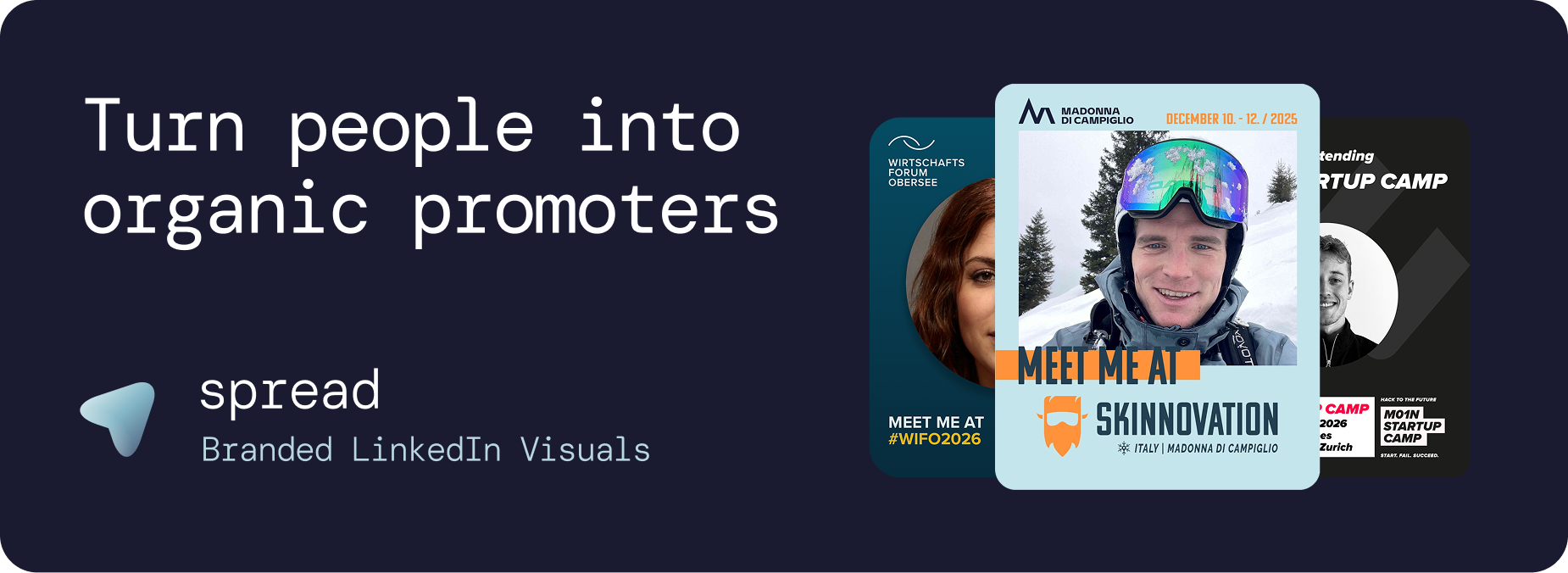
The confirmation email is opened by 80 percent of registrants. Send a personalized "I am attending" graphic with the registrant's name and photo on your event branding. We break down the full mechanic in how to promote an event on LinkedIn.
5. Make speakers your distribution engine
Send every confirmed speaker a branded "I am speaking at" graphic with their name, headshot and session. Most will post within a day. Each speaker post reaches a targeted audience you cannot buy.
6. Activate sponsors as marketing partners
Give sponsors branded assets they can share with their own networks, not just a logo on the website. Co-branded graphics in attendee posts is the format that actually moves their needle. See sponsor activation at events for the full play.
7. Run a five-touch pre-event sequence
Registration confirmation, agenda preview, speaker spotlight, logistics, day-before reminder. Each touch includes one shareable asset.
8. Use LinkedIn Events alongside personal posts
Create the LinkedIn Event for searchability and reminders, but do not rely on it for reach. Personal posts from organizers, speakers and attendees do the actual distribution. The format details are in our LinkedIn event banner size guide.
9. Plan content capture before doors open
Decide which sessions get filmed, which moments get photographed, who collects quotes and who writes the recap. The event itself is your content factory for the next 30 days.
10. Send personalized post-event graphics
Every attendee gets a recap graphic with their photo, event branding and a thank-you caption. Across our campaigns roughly 40 to 60 percent of people who open the link download the graphic. Many post it within 48 hours.
11. Distribute the recap content for 30 days
One quote per day, one clip per week, one full recap blog. This is where the long tail of registrations for next year actually comes from.
12. Measure pipeline, not vanity metrics
Registrations and impressions are leading indicators. The real outcome is qualified pipeline that mentions your event in the 90 days after. Build the dashboard before you start, not after. Our event marketing ROI guide covers what to track.
Where Go Spread fits
The tactics above that scale badly by hand are exactly what Go Spread automates: branded template creation via brand import, personalized attendee, speaker and sponsor graphics, pre-written LinkedIn captions, multi-template events, LinkedIn OAuth and analytics on every share. Start with the events use case or the communities use case if you run recurring meetups.