Event Marketing Best Practices: 11 Tactics That Work in 2026
Event marketing best practices in 2026 look very different from 2019. Paid social is more expensive, organic LinkedIn reach favors people over pages, and attendees expect to feel part of the show before they ever arrive. This guide collects the 11 tactics that consistently work for B2B conferences, summits and corporate events, with no fluff and no invented case studies.
What "best practice" actually means in event marketing
A best practice is a tactic that produces a predictable outcome across multiple events, not a clever idea that worked once.
Everything below is either supported by public LinkedIn research or by what we see across Go Spread campaigns, where roughly 40 to 60 percent of people who open a personalized event link download the graphic, and 100 attendee shares typically generate 250,000 plus organic impressions.
1. Build your audience list before you build the agenda
Most teams spend three months on speakers and three weeks on the audience list. Flip that. The single best predictor of registration volume is the size and warmth of your owned list 90 days out. Export past attendees, sponsor contacts, speaker networks and waitlists into one CRM segment, then warm them with monthly value emails before the official invite goes out.
2. Treat the registration page as a conversion page, not a brochure
Above the fold: who it is for, what they will leave with, date, location, and a single CTA. Logos, agenda and bios belong below the fold. Every additional field on the form costs you registrations.
3. Activate attendees the moment they register with Go Spread
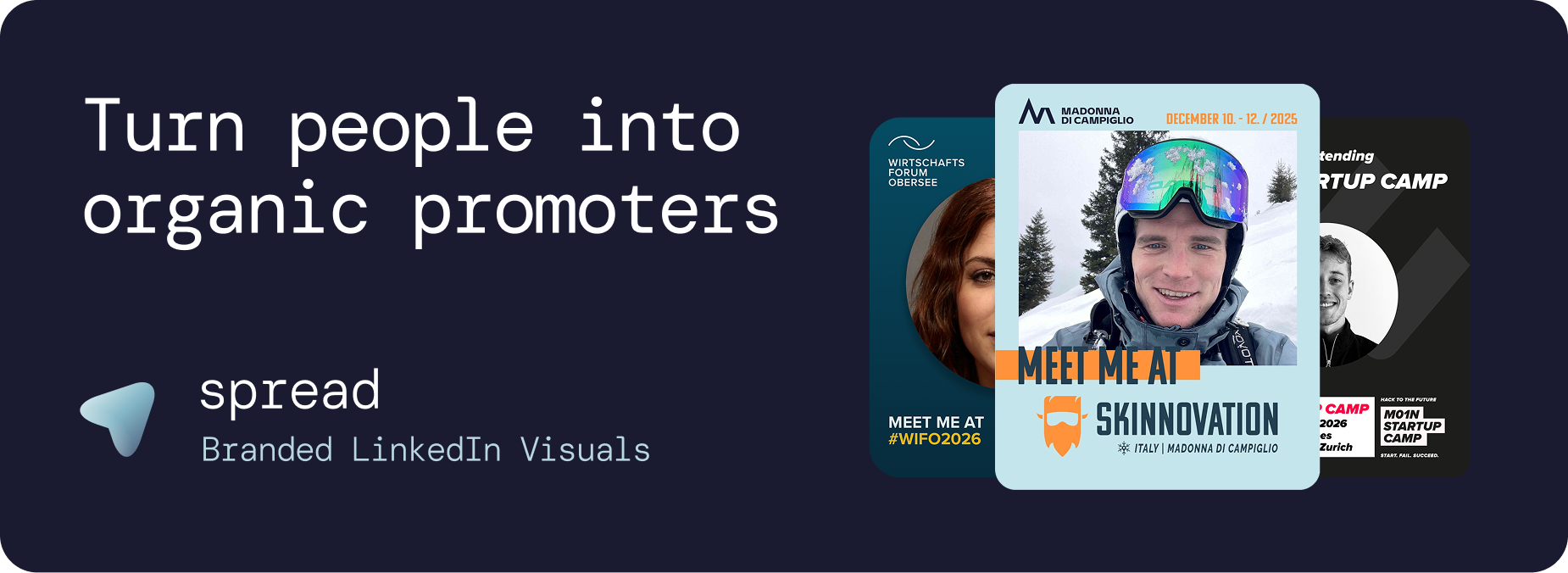
The confirmation email is the highest open-rate email you will ever send. Use it. Send a personalized "I am attending" graphic with the attendee's name and photo on your event branding, ready to share on LinkedIn. We cover the full mechanic in our organic LinkedIn promotion playbook.
4. Make sharing one tap, not three steps with Go Spread
Friction kills advocacy. The flow that converts is: open link, see your branded graphic, copy a pre-written caption, post. If your attendees have to design anything, write anything or upload anywhere, you have already lost most of the share volume.
5. Personal profiles outperform company pages
LinkedIn's own data shows employee posts get roughly 8x the engagement of company page posts. The same holds for events. 200 attendees posting from personal profiles will out-reach the best company page campaign you can run, every time.
6. Give speakers a reason to post with Go Spread
Speakers will post about your event if you make them look good. Send each speaker a branded "I am speaking at" graphic with their name, photo and session title. Most will share it within 24 hours. This is the same pattern we describe in our event branding ideas guide.
7. Activate sponsors with shareable assets with Go Spread
Sponsors care about reach and lead quality. Branded graphics that mention the sponsor in attendee posts deliver both. See the full mechanic in our piece on sponsor activation at events.
8. Run a 5-touch pre-event sequence
One announcement is not a campaign. Plan five touches per attendee in the 30 days before the event: registration confirmation, agenda preview, speaker spotlight, logistics, and the day-before reminder. Each touch should give them something they can share.
9. Measure organic reach, not just registrations
Registrations is a vanity metric for a B2B event. The real metric is qualified pipeline 90 days post-event. Track impressions, post engagement, profile views of your speakers, and inbound demo requests that mention the event. Our impressions analysis shows the math.
10. Capture content live, distribute for 30 days
The event is the content factory. Quotes, clips, photos and stats from on stage become 30 days of LinkedIn posts. Plan distribution before the event, not after.
11. Close the loop with a post-event recap graphic
The post-event share is the easiest win in the entire playbook. Every attendee gets a personalized recap graphic with their photo, the event branding and a thank-you caption. Most will post it. This single touch is what turns a one-time event into a year-round brand asset.
What we use at Go Spread
We are event organizers ourselves, which is why Go Spread exists. The platform handles the parts of these best practices that scale badly by hand: branded template creation with auto-detected logos and colors via brand import, personalized attendee and speaker graphics, pre-written LinkedIn captions, multi-template events, LinkedIn OAuth for one-click posting and analytics on every share.
If you want to skip the manual graphic work, start with our event organizer use case or jump straight into creating a campaign.